Nail file grits explained: what 100, 180 and 240 are actually for

Files are labelled with a number and very little explanation, which leads to a common and damaging mistake: treating a low number as "better" or "more professional". The number is simply how coarse the abrasive is, and matching it to the surface you are working on is most of good filing technique.
What the number means
Grit numbers describe how many abrasive particles sit in a given area. A low number means fewer, larger particles and a coarser cut; a high number means many small particles and a finer finish. So 100 grit removes material fast and roughly, and 240 refines gently.
That is the entire system. There is no quality implication at all — a 240 file is not a worse file than a 100, it is a file for a different job.
100 grit: enhancements only
Coarse files in the 80 to 100 range are for shaping hard artificial product quickly. They cut fast, which is what you want on acrylic and hard gel.
Used on a natural nail, this range removes far more plate than intended and leaves deep scratches that weaken the nail. This is the single most common cause of thin, splitting nails after a home manicure.
180 grit: the natural-nail workhorse
Around 180 is the general-purpose grit for shaping a natural free edge. It removes enough material to work at a reasonable pace while leaving a surface that refines easily.
For most people doing their own nails, a single 180 side handles all the shaping they will ever need, with a finer side for finishing.
240 and above: finishing and smoothing
Finer grits refine the shape rather than create it. They smooth the free edge, remove the small burrs that catch on fabric, and prepare the surface without scratching it.
Sealing the edge with a fine grit after shaping noticeably reduces peeling and splitting, because most splits start from a rough edge catching on something.
Buffers are a different tool with a different risk
A buffer block smooths and shines the nail surface. Used occasionally it produces a clean natural finish; used often it thins the plate, because shine comes from removing the top layer.
A sensible limit is light buffing at most every few weeks, and never to the point where the nail feels warm — heat means you are removing material quickly.
File in one direction, and stop sawing
Sawing back and forth works the layers of the nail plate against each other and is the main cause of splitting at the edge. Filing in one direction, lifting between strokes, avoids it entirely.
It feels slower for the first few nails and then stops feeling slower. It is the highest-value technique change most people can make, and it costs nothing.
Grits on our shelf
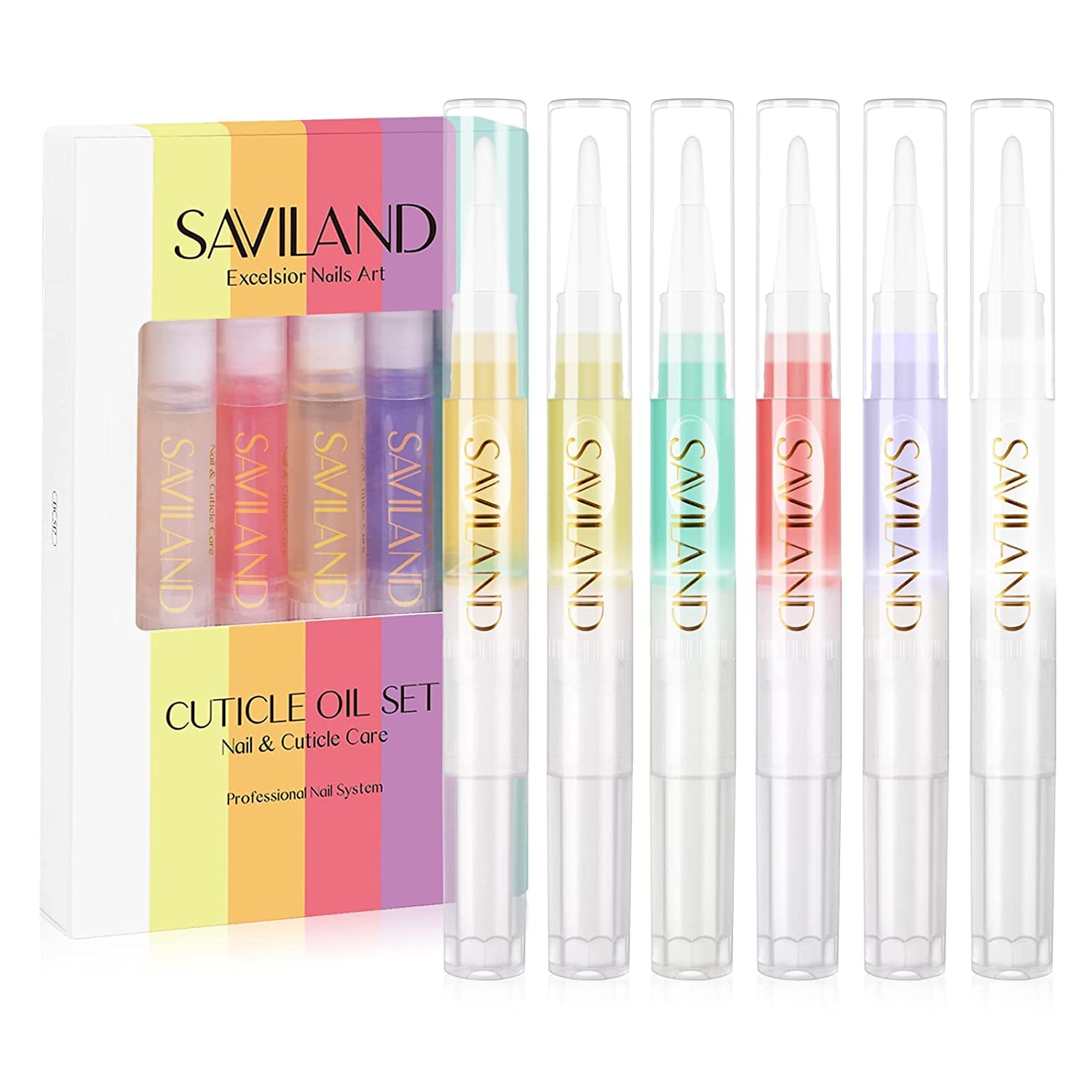
The file and buffer sets here list their grits rather than describing them vaguely, so you can match the tool to the job. On our own shelf that range currently runs from $6.99 for the SAVILAND Vitamin E Cuticle Oil Pen Set – 6 Plant-Based Nail Strengtheners up to $39.90 for the MR.GREEN 8-in-1 Manicure Pedicure Set with Green PU Leather Case.
The items here all live under Nail Care — 5 products at the moment. What you see here is what checkout charges — nothing is added at the last step.
- SAVILAND Vitamin E Cuticle Oil Pen Set – 6 Plant-Based Nail Strengtheners — $6.99
- Fandamei 11-Piece Manicure Pedicure Kit with Nail Files 100/180 & Cuticle Tools, Pink — $7.99
- AIJIMEI Nail Brush Cleaner & Restorer Kit with Glass Cup & Cotton Pads, 58ml — $7.99
- KV.YSHQLNE 32-in-1 Professional Manicure Pedicure Set for Women, Blue — $11.20
- MR.GREEN 8-in-1 Manicure Pedicure Set with Green PU Leather Case — $39.90
Related reading
Two other pieces on this site cover ground next to this one. Sponge gradients fail for three predictable reasons, and all three are fixable before you start. And on a related note, the dividing line is porosity. Anything that absorbs cannot be cleaned reliably, and has to be disposable.
- A clean gradient: getting sponge ombre right on the first attempt
- Hygiene between clients: what has to be single-use and what does not
The mistakes that thin a nail plate
Using a coarse file on a natural nail is the big one. An 80 or 100 grit removes far more material than intended and leaves scratches deep enough to weaken the plate, and the damage shows up weeks later as splitting and peeling.
Filing into the side walls is the other. The nail is supported at the corners, and filing deeply into them removes that support, which is what leads to a nail tearing down the side under everyday pressure.
When a file is finished
Files wear out and most people keep them long past the point of usefulness. A worn file skids across the nail instead of cutting, which tempts more pressure, which causes more heat and more damage.
Run a thumb across the surface: if the grit feels smooth in patches, that file is done. Glass and metal files can be washed and reused almost indefinitely, which is the argument for them over disposable emery boards if you file often.
If you only own two
An 180 for shaping and something in the 240 range for finishing will cover natural nails completely. Add a coarse file only if you are working on enhancements, and keep it away from natural plate.
Orders leave our counter in Los Angeles, CA at $4.50, or free once you pass $35. You have 30 days to return anything unused. [email protected] reaches us.